publications
publications by categories in reversed chronological order. generated by jekyll-scholar.
2026
-
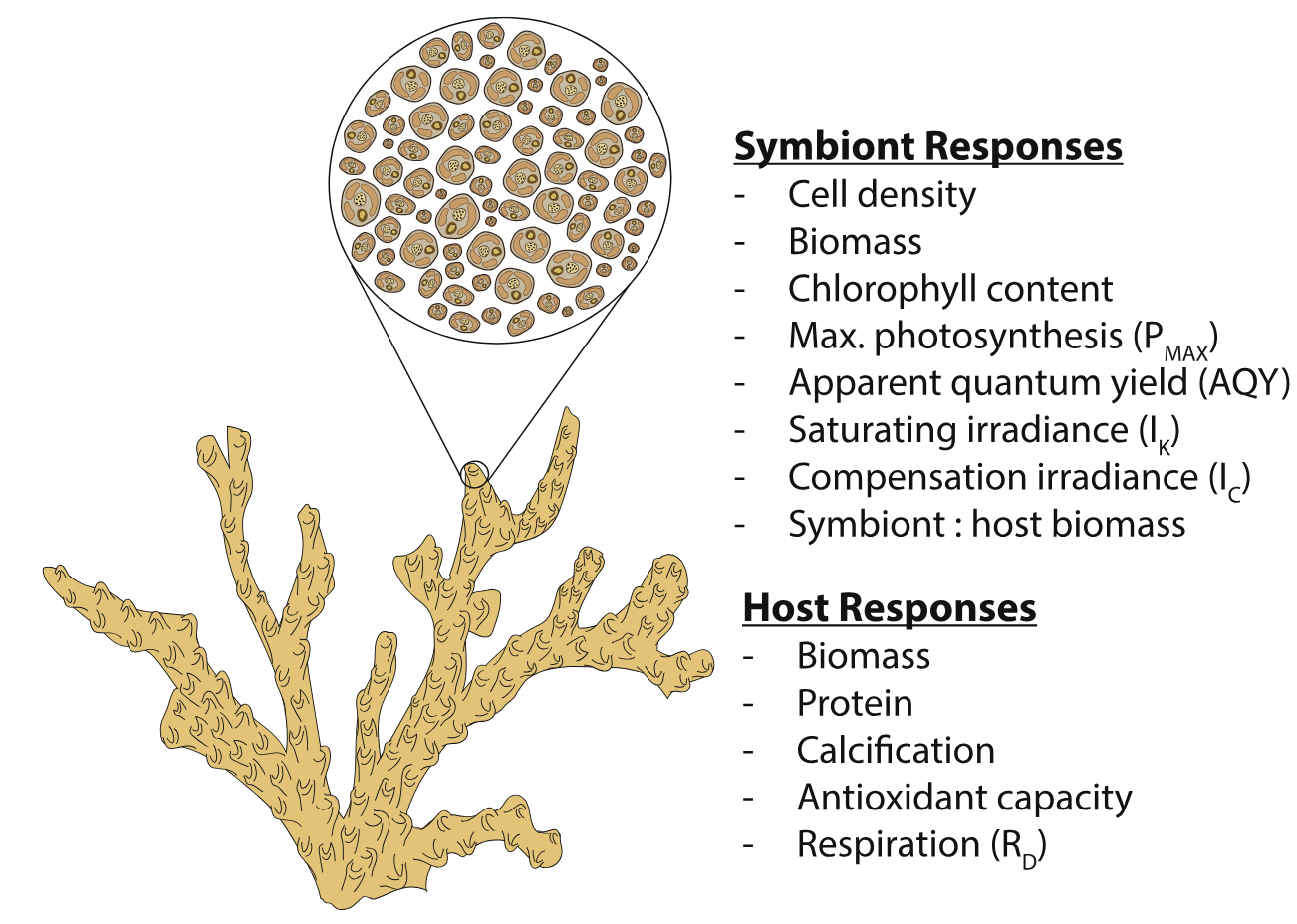 Seasonal Physiological Strategies Reveal Contrasting Host–Symbiont Dynamics Among Dominant Indo-Pacific Reef-Building CoralsAriana S. Huffmyer, Emma L. Strand, Serena Hackerott, and 13 more authorsEcology and Evolution, Jul 2026
As coral reefs face declines driven by thermal stress and the breakdown of coral symbiosis (i.e., coral bleaching), restoration efforts rely on coral health and resilience rankings. However, seasonal plasticity in symbiosis and metabolism and the presence of cryptic species complicates data interpretation. Quantifying seasonal plasticity in coral physiology and incorporating genetic identification are essential for interpreting and drawing conclusions from trait-based and fitness-based analyses. To test the effect of seasonal and site variation on physiology, we sampled three ecologically dominant genera, Acropora, Pocillopora, and Porites across three lagoon sites (n = 15 tagged colonies genus−1 site−1) on the north shore of Moʻorea, French Polynesia in January, March, September, and December of 2020. We identified coral host and intracellular Symbiodiniaceae to the highest taxonomic resolution possible and quantified 13 physiological variables. Genetic analyses identified A. pulchra and cryptic lineages in Pocillopora (P. meandrina, P. tuahiniensis) and Porites (P. evermanni, P. lobata/lutea). Acropora pulchra hosted Durusdinium trenchii and Symbiodinium microadriaticum. Symbiont communities differed between cryptic congeners, with P. meandrina hosting Cladocopium latusorum and P. tuahiniensis hosting Cladocopium pacificum, whereas P. evermanni and P. lobata/lutea both hosted Cladocopium (C15), but each with unique C15 profiles. Acropora and Pocillopora displayed seasonal cycles of symbiont density and productivity (“boom and bust”) in association with light and temperature, a pattern that may contribute to the greater environmental sensitivity previously reported in these taxa. In contrast, Porites exhibited greater symbiont stability, with temperature—rather than light—showing stronger associations with host physiology. Increased host biomass under cooler conditions, which may provide greater energy reserves, could represent one mechanism contributing to the comparatively greater stress tolerance observed in massive Porites. Collectively, our findings highlight the importance of integrating baseline physiological measurements with host and symbiont genetics when interpreting coral responses across seasons.
@article{Huffmyer.etal2026, title = {Seasonal {Physiological} {Strategies} {Reveal} {Contrasting} {Host}–{Symbiont} {Dynamics} {Among} {Dominant} {Indo}-{Pacific} {Reef}-{Building} {Corals}}, volume = {16}, copyright = {© 2026 The Author(s). Ecology and Evolution published by British Ecological Society and John Wiley \& Sons Ltd.}, issn = {2045-7758}, url = {https://onlinelibrary.wiley.com/doi/abs/10.1002/ece3.74044}, doi = {10.1002/ece3.74044}, language = {en}, number = {7}, urldate = {2026-09-18}, journal = {Ecology and Evolution}, author = {Huffmyer, Ariana S. and Strand, Emma L. and Hackerott, Serena and Wong, Kevin H. and Becker, Danielle M. and Conetta, Dennis and Terpis, Kristina X. and Pfab, Ferdinand and Wong, Juliet M. and Dellaert, Zoe and Oliaro, Francis J. and Cunning, Ross and Eirin-Lopez, Jose M. and Roberts, Steven B. and Nisbet, Roger M. and Putnam, Hollie M.}, year = {2026}, month = jul, keywords = {symbiosis, acclimatization, plasticity, resilience, cryptic species, trait-based ecology}, pages = {e74044}, } -
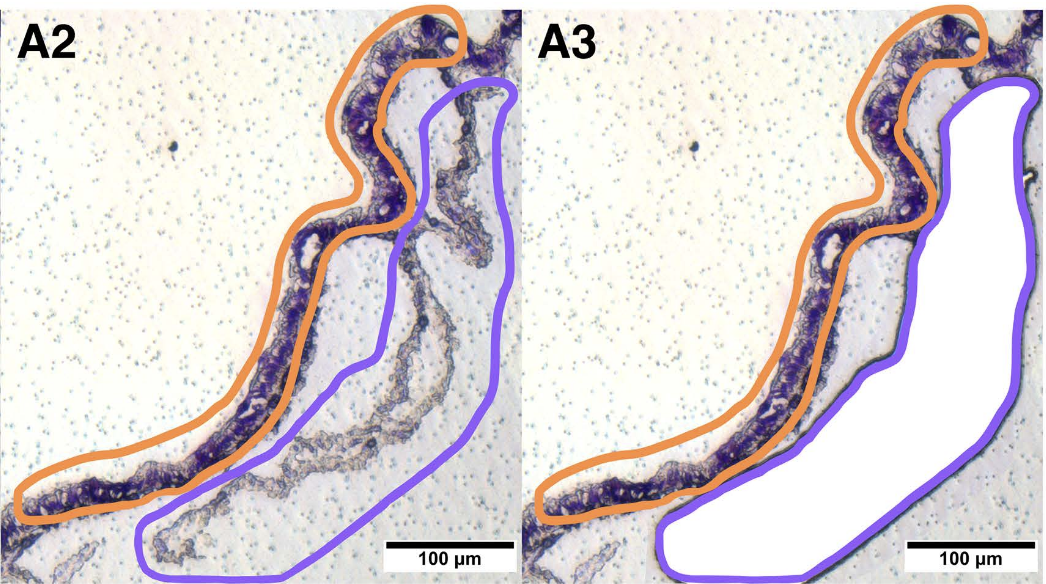 Spatially resolved gene expression analysis illuminates location-specific functions in the reef-building coral Pocillopora acutaZoe Dellaert and Hollie M. PutnamPLOS One, Sep 2026
Reef-building coral polyps contain multiple specialized tissue types with distinct functions, from feeding and defense to symbiosis and skeleton formation. While these cell types have been characterized microscopically and more recently via single-cell RNA sequencing, spatially resolved high-throughput gene expression profiling remains limited in corals. Here we combine Laser Capture Microdissection with RNA sequencing to characterize tissue-specific gene expression in the reef building coral Pocillopora acuta . Oral tissues, adjacent to the seawater, exhibited 1,253 upregulated genes enriched for amino acid synthesis, transmembrane transport, signaling, environmental sensing, and secretion. These tissues showed high expression of immune and microbial-recognition genes consistent with their interface with seawater microbiota: mucins, lectins, toll-like receptors (TLRs), and MyD88 that connects TLRs to the NF-κB pathway. Aboral tissues, which build the coral’s skeleton, exhibited 552 upregulated genes enriched for developmental processes, cell adhesion, and stimulus response. We identified strong differential expression of biomineralization- associated genes, including Chitin Synthase and Wnt pathway members, suggesting previously underdescribed roles in skeleton formation. Critically, many genes implicated in specialized functions were expressed in multiple tissues. This lack of location specificity suggests functional biomarkers will likely entail multi-gene expression patterns rather than single genes. Collectively, we highlight the need for greater spatial resolution (e.g., single cell/nuclei and spatial transcriptomics) to fully resolve coral responses within their native tissue complexity. As anthropogenic climate change increasingly threatens coral reefs, spatially resolved molecular insight into coral biology will be critical for interpreting stress response mechanisms, forecasting their limits, and applying human interventions.
@article{Dellaert.Putnam2026,
  title = {Spatially resolved gene expression analysis illuminates location-specific functions in the reef-building coral {Pocillopora} acuta},
  volume = {21},
  issn = {1932-6203},
  url = {https://dx.plos.org/10.1371/journal.pone.0358454},
  doi = {10.1371/journal.pone.0358454},
  language = {en},
  number = {9},
  urldate = {2026-09-18},
  journal = {PLOS One},
  author = {Dellaert, Zoe and Putnam, Hollie M.},
  editor = {Escriva, Hector},
  month = sep,
  year = {2026},
  pages = {e0358454},
}
2025
-
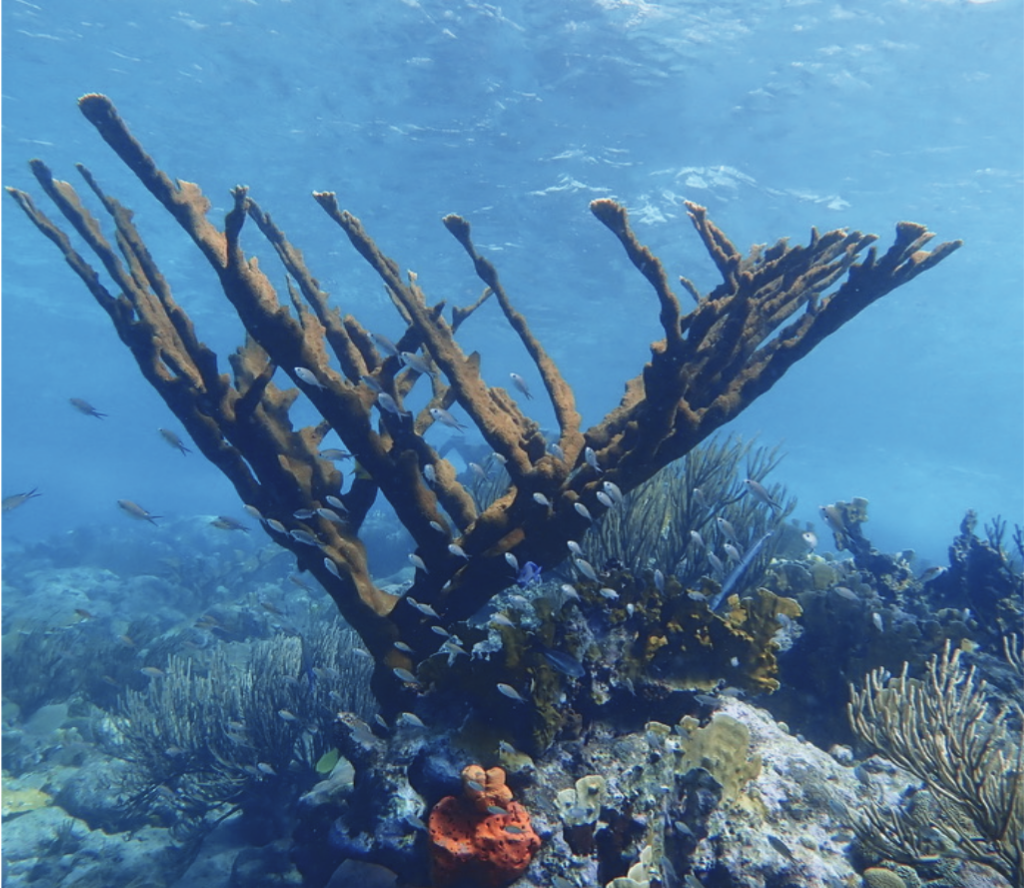 Mosaic accumulation of somatic genetic variation and estimates of age in the long-lived reef-building coral Acropora palmataTrinity Conn, Jessie Renton, Valerie F Chamberland, and 4 more authorsbioRxiv, 2025
@article{conn2025mosaic, title = {Mosaic accumulation of somatic genetic variation and estimates of age in the long-lived reef-building coral Acropora palmata}, author = {Conn, Trinity and Renton, Jessie and Chamberland, Valerie F and Dellaert, Zoe and Reusch, Thorsten BH and Werner, Benjamin and Baums, Iliana B}, journal = {bioRxiv}, pages = {2025--04}, year = {2025}, publisher = {Cold Spring Harbor Laboratory}, }
2024
-
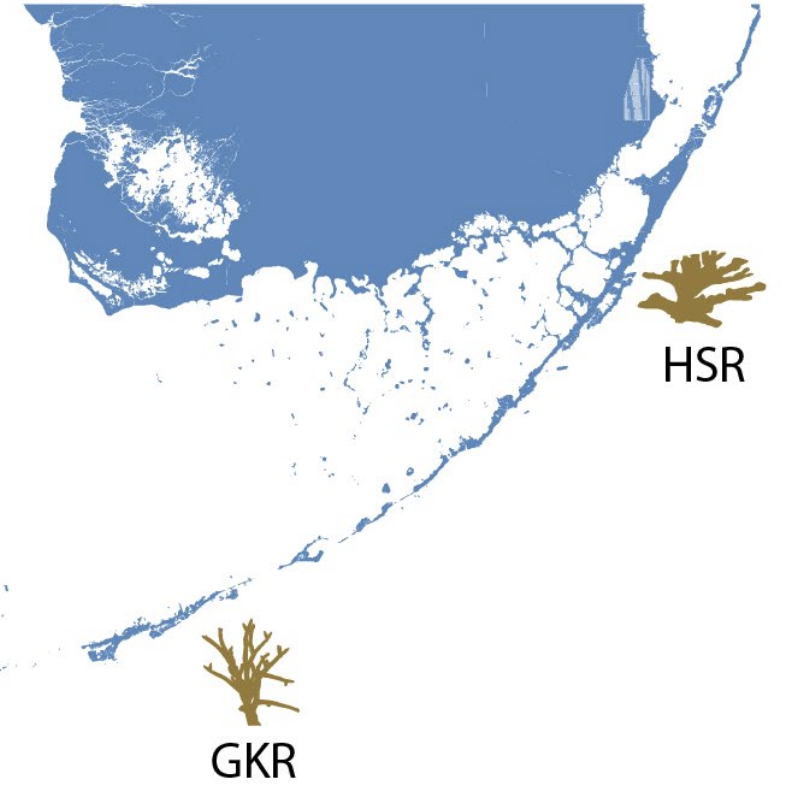 Chromosome-level genome assemblies and genetic maps reveal heterochiasmy and macrosynteny in endangered Atlantic AcroporaNicolas S. Locatelli, Sheila A. Kitchen, Kathryn H. Stankiewicz, and 7 more authorsBMC Genomics, Nov 2024
Over their evolutionary history, corals have adapted to sea level rise and increasing ocean temperatures, however, it is unclear how quickly they may respond to rapid change. Genome structure and genetic diversity contained within may highlight their adaptive potential.
@article{Locatelli.etal2024, title = {Chromosome-level genome assemblies and genetic maps reveal heterochiasmy and macrosynteny in endangered {Atlantic} {Acropora}}, volume = {25}, issn = {1471-2164}, url = {https://doi.org/10.1186/s12864-024-11025-3}, doi = {10.1186/s12864-024-11025-3}, language = {en}, number = {1}, urldate = {2024-11-20}, journal = {BMC Genomics}, author = {Locatelli, Nicolas S. and Kitchen, Sheila A. and Stankiewicz, Kathryn H. and Osborne, C. Cornelia and Dellaert, Zoe and Elder, Holland and Kamel, Bishoy and Koch, Hanna R. and Fogarty, Nicole D. and Baums, Iliana B.}, month = nov, year = {2024}, keywords = {Coral, Acropora, Hermaphrodite, Ancestral linkage group, Chromosome, Genome, Heterochiasmy, Linkage map, Recombination rate}, pages = {1119}, } -
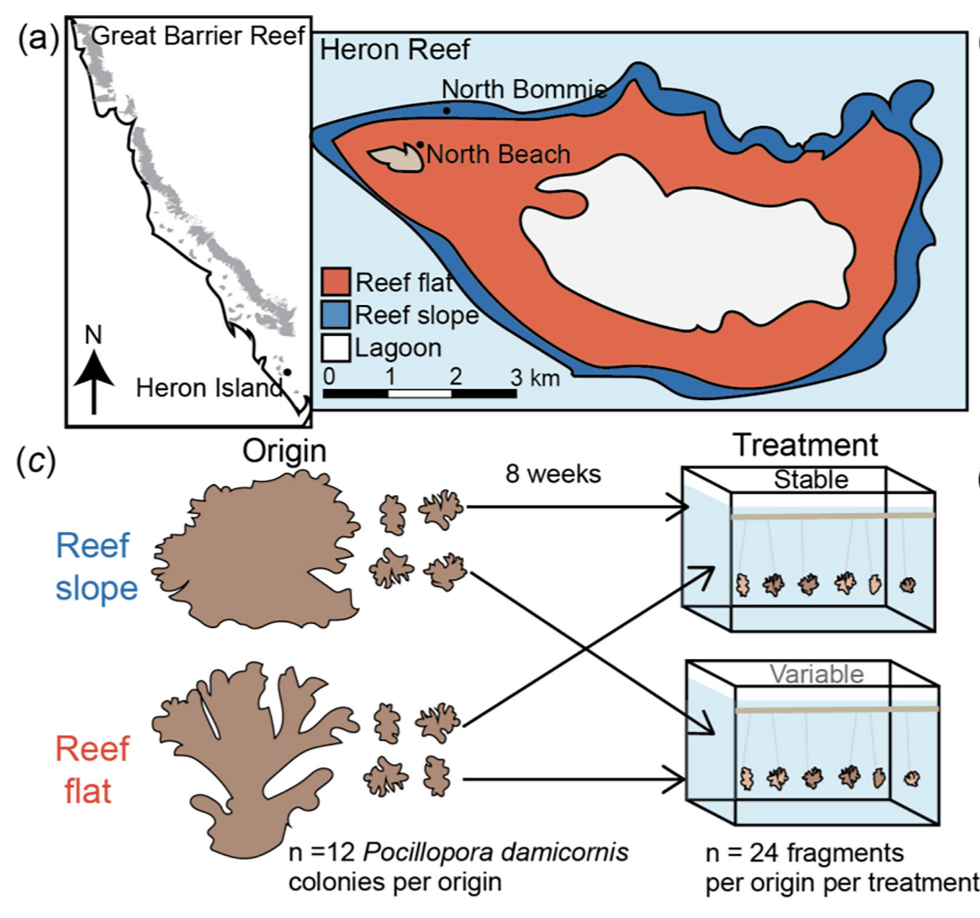 Extreme Environmental Variability Induces Frontloading of Coral Biomineralisation Genes to Maintain Calcification Under pCO VariabilityKristen T. Brown, Zoe Dellaert, Marcelina P. Martynek, and 4 more authorsMolecular Ecology, 2024
Corals residing in habitats that experience high-frequency seawater pCO2 variability may possess an enhanced capacity to cope with ocean acidification, yet we lack a clear understanding of the molecular toolkit enabling acclimatisation to environmental extremes or how life-long exposure to pCO2 variability influences biomineralisation. Here, we examined the gene expression responses and micro-skeletal characteristics of Pocillopora damicornis originating from the reef flat and reef slope of Heron Island, southern Great Barrier Reef. The reef flat and reef slope had similar mean seawater pCO2, but the reef flat experienced twice the mean daily pCO2 amplitude (range of 797 v. 399 μatm day−1, respectively). A controlled mesocosm experiment was conducted over 8 weeks, exposing P. damicornis from the reef slope and reef flat to stable (218 ± 9) or variable (911 ± 31) diel pCO2 fluctuations (μatm; mean ± SE). At the end of the exposure, P. damicornis originating from the reef flat demonstrated frontloading of 25% of the expressed genes regardless of treatment conditions, suggesting constitutive upregulation. This included higher expression of critical biomineralisation-related genes such as carbonic anhydrases, skeletal organic matrix proteins, and bicarbonate transporters. The observed frontloading corresponded with a 40% increase of the fastest deposited areas of the skeleton in reef flat corals grown under non-native, stable pCO2 conditions compared to reef slope conspecifics, suggesting a compensatory response that stems from acclimatisation to environmental extremes and/or relief from stressful pCO2 fluctuations. Under escalating ocean warming and acidification, corals acclimated to environmental variability warrant focused investigation and represent ideal candidates for active interventions to build reef resilience while societies adopt strict policies to limit climate change.
@article{Brown.etal2024,
  title = {Extreme {Environmental} {Variability} {Induces} {Frontloading} of {Coral} {Biomineralisation} {Genes} to {Maintain} {Calcification} {Under} {pCO} {Variability}},
  volume = {n/a},
  copyright = {© 2024 The Author(s). Molecular Ecology published by John Wiley \& Sons Ltd.},
  issn = {1365-294X},
  url = {https://onlinelibrary.wiley.com/doi/abs/10.1111/mec.17603},
  doi = {10.1111/mec.17603},
  language = {en},
  number = {n/a},
  urldate = {2024-12-05},
  journal = {Molecular Ecology},
  author = {Brown, Kristen T. and Dellaert, Zoe and Martynek, Marcelina P. and Durian, Julia and Mass, Tali and Putnam, Hollie M. and Barott, Katie L.},
  year = {2024},
  keywords = {coral reefs, ocean acidification, environmental variability, extreme environments, priming, local adaptation, biomineralisation},
  pages = {e17603},
}
2023
-
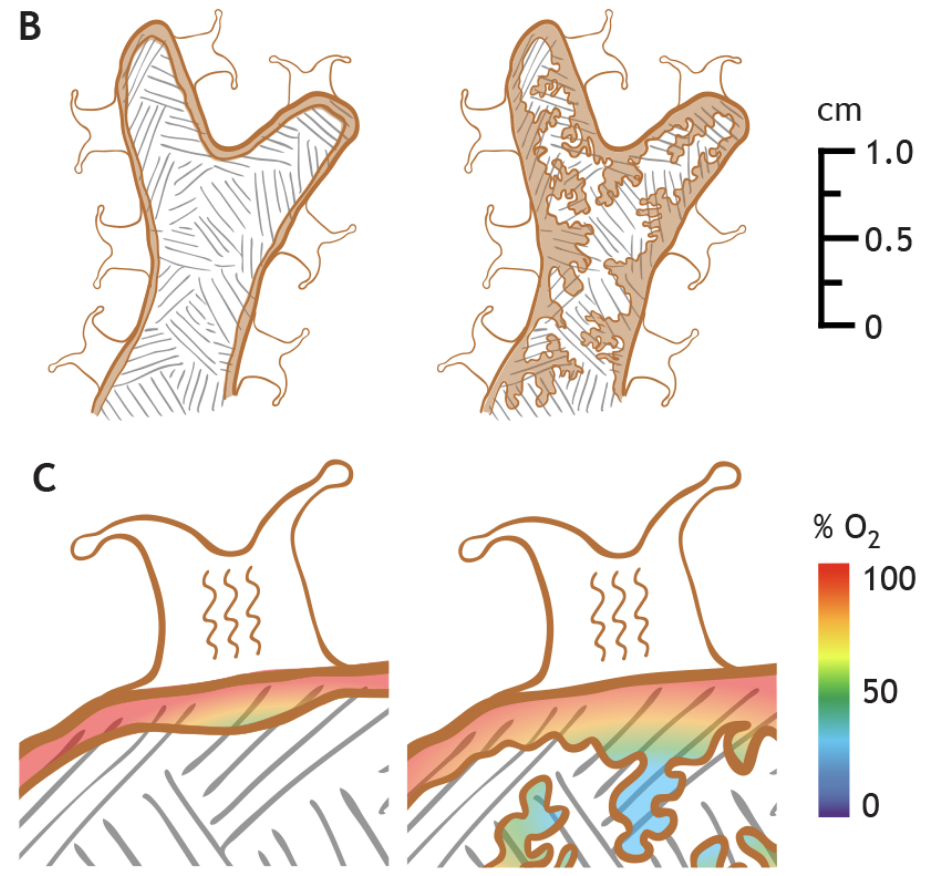 Reconciling the variability in the biological response of marine invertebrates to climate changeZoe Dellaert and Hollie M PutnamJournal of Experimental Biology, Sep 2023
As climate change increases the rate of environmental change and the frequency and intensity of disturbance events, selective forces intensify. However, given the complicated interplay between plasticity and selection for ecological – and thus evolutionary – outcomes, understanding the proximate signals, molecular mechanisms and the role of environmental history becomes increasingly critical for ecoevolutionary forecasting. To enhance the accuracy of our forecasting, we must characterize environmental signals at a level of resolution that is relevant to the organism, such as the microhabitat it inhabits and its intracellular conditions, while also quantifying the biological responses to these signals in the appropriate cells and tissues. In this Commentary, we provide historical context to some of the longstanding challenges in global change biology that constrain our capacity for eco-evolutionary forecasting using reef-building corals as a focal model. We then describe examples of mismatches between the scales of external signals relative to the sensors and signal transduction cascades that initiate and maintain cellular responses. Studying cellular responses at this scale is crucial because these responses are the basis of acclimation to changing environmental conditions and the potential for environmental ‘memory’ of prior or historical conditions through molecular mechanisms. To challenge the field, we outline some unresolved questions and suggest approaches to align experimental work with an organism’s perception of the environment; these aspects are discussed with respect to human interventions.
@article{Dellaert.Putnam2023,
  title = {Reconciling the variability in the biological response of marine invertebrates to climate change},
  volume = {226},
  copyright = {All rights reserved},
  doi = {https://doi.org/10.1242/jeb.245834},
  language = {en},
  number = {17},
  journal = {Journal of Experimental Biology},
  author = {Dellaert, Zoe and Putnam, Hollie M},
  month = sep,
  year = {2023},
  pages = {jeb245834},
}
2022
-
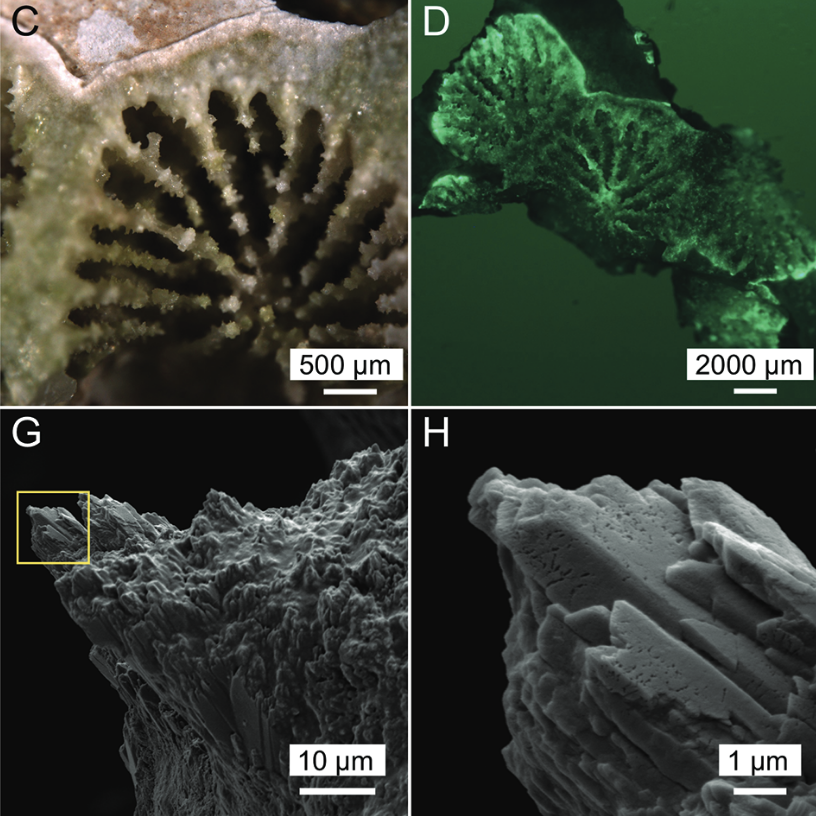 Uncovering the Effects of Symbiosis and Temperature on Coral CalcificationZoe Dellaert, Phillip A. Vargas, Patrick J. La Riviere, and 1 more authorThe Biological Bulletin, Jan 2022
We tested the impact of temperature and symbiont state on calcification in corals, using the facultatively symbiotic coral Astrangia poculata as a model system. Symbiotic and aposymbiotic colonies of A. poculata were reared in 15, 20, and 27 7C conditions. We used scanning electron microscopy to quantify how these physiological and environmental conditions impact skeletal structure. Buoyant weight data over time revealed that temperature significantly affects calcification rates. Scanning electron microscopy of A. poculata skeletons showed that aposymbiotic colonies appear to have a lower density of calcium carbonate in actively growing septal spines. We describe a novel approach to analyze the roughness and texture of scanning electron microscopy images. Quantitative analysis of the roughness of septal spines revealed that aposymbiotic colonies have a rougher surface than symbiotic colonies in tropical conditions (27 7C). This trend reversed at 15 7C, a temperature at which the symbionts of A. poculata may exhibit parasitic properties. Analysis of surface texture patterns showed that temperature impacts the spatial variance of crystals on the spine surface. Few published studies have examined the skeleton of A. poculata by using scanning electron microscopy. Our approach provides a way to study detailed changes in skeletal microstructure in response to environmental parameters and can serve as a proxy for more expensive and timeconsuming analyses. Utilizing a facultatively symbiotic coral that is native to both temperate and tropical regions provides new insights into the impact of both symbiosis and temperature on calcification in corals.
@article{Dellaert.etal2022,
  title = {Uncovering the {Effects} of {Symbiosis} and {Temperature} on {Coral} {Calcification}},
  copyright = {All rights reserved},
  issn = {0006-3185, 1939-8697},
  url = {https://www.journals.uchicago.edu/doi/10.1086/716711},
  doi = {10.1086/716711},
  language = {en},
  urldate = {2022-01-11},
  journal = {The Biological Bulletin},
  author = {Dellaert, Zoe and Vargas, Phillip A. and La Riviere, Patrick J. and Roberson, Loretta M.},
  month = jan,
  year = {2022},
  pages = {000--000},
}